Stryker

Computer Assisted Surgery

Reasons orthopaedic surgeons may choose computer-assisted technology:

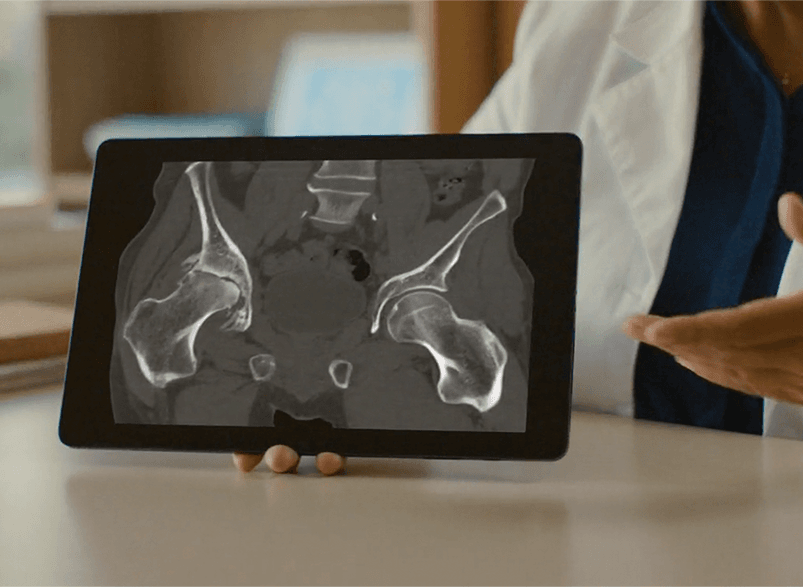
Provides your surgeon with comprehensive data about your anatomy which may result in more exact placement of your joint replacement

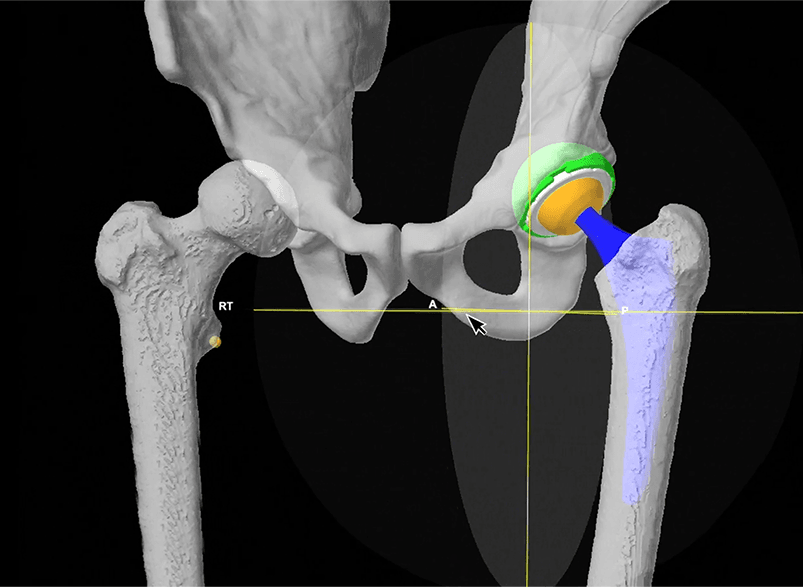
Allows the surgeon to more accurately plan for your surgery with a partial 3-dimensional model of your hip or knee2

Provides the surgeon with more control, feedback and the ability to correct potential errors during the surgery1

Allows for better visualization of anatomy, which is particularly important when minimally-invasive techniques are used

Tremendous advances have been made in joint replacement that makes it a viable option for a greater number of people than ever before. Over the past four decades joint replacement has been proven to relieve severe joint pain and restored joint function in over 90% of patients undergoing the procedure.7

During a joint replacement procedure, your surgeon will strive to ensure that everything is aligned properly. Accurate alignment of the hip or knee components is critical to the overall function of your new joint,1,2 and it also plays a role in helping your joint feel healthy again, and helping the joint replacement to potentially last longer. Computer-assisted technology has made it possible for your orthopaedic specialist to navigate joint replacement procedures with a level of accuracy so precise it may improve the results of your surgery.1

Computer Assisted Knee Surgery

Potential Benefits of Computer-Assisted Surgery

There are several potential benefits for those who have computer-assisted surgery with their total joint replacement:

Computer-assisted surgery may allow for less-invasive surgical techniques, which have several other potential advantages, including:

How does it work?

Computer Assisted
Surgery

Click below to view our Computer Assisted Surgery Video.

Computer Assisted Knee Surgery Video

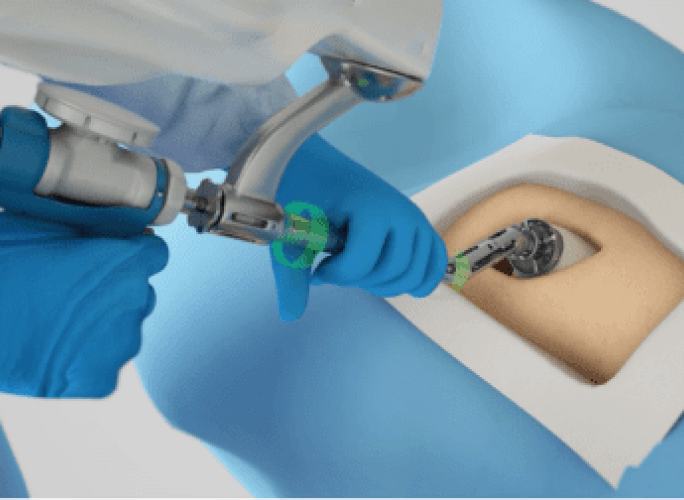
Stryker Navigation technology uses special tracking devices, providing your surgeon a comprehensive understanding of your joint mechanics in the operating room (OR). Armed with this information, your surgeon can make adjustments within a fraction of a degree, helping to ensure your new joint has the stability and range of motion needed for a successful replacement. Specifically, the technology uses the latest advancements in science and computer engineering to make the procedure more accurate than joint surgery without it.1 As the surgeon moves an instrument within your joint, special infrared trackers calculate its position and wireless instruments instantaneously transfer the data to a computer in the OR. This information is then displayed on a monitor as an interactive model of the anatomy or “blueprint” that supplies the surgeon with all the angles, lines and measurements of your unique anatomy. The surgeon will then replace the diseased bone with new, artificial joint components often called prostheses or implants. Joint implants are engineered to replicate a normal, healthy joint.

With certain techniques, your surgeon may use pins that hold trackers around the incision site of your joint. These temporary placeholders give the computer key information and may make the surgery even more exact, but it does mean the possibility of additional scarring at the pin points. Emerging technologies and alternative techniques may reduce the number of incisions and therefore reduce scarring.

References
1. Sikorski JM, Chauhan S. Computer- Assisted Orthopaedic Surgery: Do we need CAOS? J Bone Joint Surg 2003; 85-B:319-23.
2. Noble PC, Sugano N, Johnston JD, Thompson MT, Conditt MA, Engh CA Sr, Mathis KB. Computer Simulation: How can it help the surgeon optimize implant position? CORR. 2003 Dec; (417):242-52.
3. Widmer KH, Grutzner PA. Joint replacement-total hip replacement with CT-based navigation. Injury. 2004 Jun; 35 Suppl. 1:S-A84-9.
4. Klein GR, Parvizi J, Venkat RR, Mathew AS, HozackWJ. Evaluation of in vivo knee kinematics by a computerized navigation system during total knee arthroplasty. J Arthroplasty. 2004 Dec; Vol. 19:986-91.
5. Keggi, Kristaps. Total hip arthroplasty through a minimally invasive anterior surgical approach, JBJS, Vol. 85-A.
6. Tria AJ,Minimal Incision Total knee Arthroplasty, CORR 2003, Vol 416.
7. Zanasi, Stefano.Minimally Invasive Computer-assisted Total Knee Arthroplasty through a Subvastus Approach, October 2006. Article from: Orthosupersite.com.
8. Kalairajah, et al. Blood Loss after total knee replacement, JBJS, Vol. 87-B, No. 11, Nov. 2005.

References for Computer Assisted Navigation Video
3. Sikorski JM, Chauhan S. Computer-Assisted Orthopaedic Surgery: Do we need CAOS? J Bone Joint Surg 2003; 85- B:319-23.
4. Noble PC, Sugano N, Johnston JD, Thompson MT, Conditt MA, Engh CA Sr, Mathis KB. Computer Simulation: How can it help the surgeon optimize implant position? CORR. 2003 Dec; (417):242-52.
5. Widmer KH, Grutzner PA. Joint replacement-total hip replacement with CT-based navigation. Injury. 2004 Jun; 35 Suppl. 1:S-A84-9.
6. Klein GR, Parvizi J, Venkat RR, Mathew AS, Hozack WJ. Evaluation of in vivo knee kinematics by a computerized navigation system during total knee arthroplasty. J Arthroplasty. 2004 Dec; Vol. 19:986-91.
7. Keggi, Kristaps. Total hip arthroplasty through a minimally invasive anterior surgical approach, JBJS, Vol. 85-A.
8. Kalairajah, et al. Blood Loss after total knee replacement, JBJS, Vol. 87-B, No. 11, Nov. 2005.
9. Zanasi, Stefano. Minimally Invasive Computer-assisted Total Knee Arthroplasty through a Subvastus Approach, October 2006. Article from: Orthosupersite.com.
10. Tria AJ, Minimal Incision Total knee Arthroplasty, CORR 2003, Vol 416.